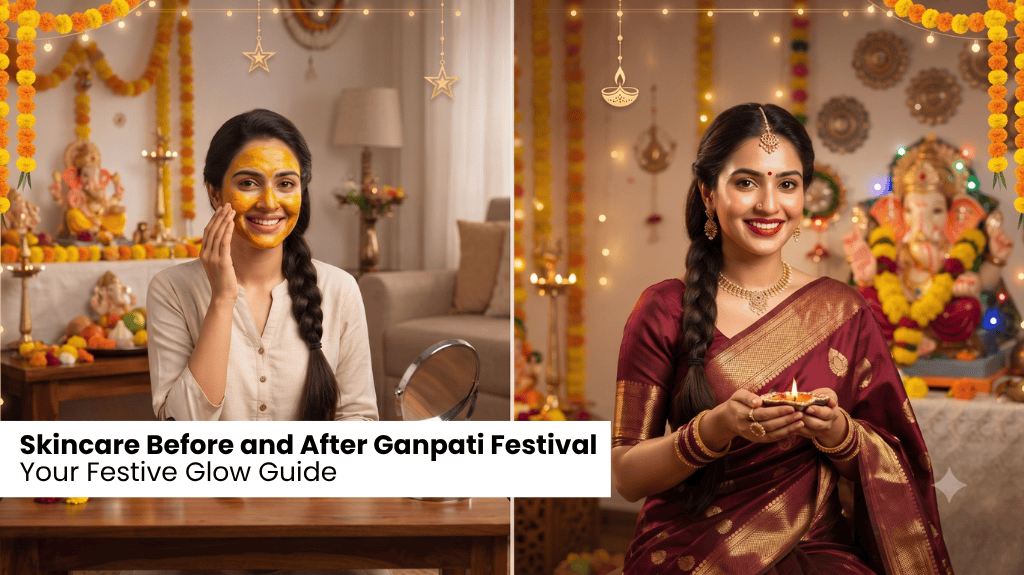
Ganpati celebrations is the time to dress up, meet family and friends, visit all the pandals, attend aartis and of course take a lot of pictures too. But between the heat, humidity, makeup, travel, sweat and long hours, your skin can need special care.
That is why a little planning ahead is best for skincare before and after Ganpati festival instead of starting it the night before. A little preparation, a simple routine during the celebrations and proper recovery afterwards is all your skin needs to stay comfortable, hydrated and healthy throughout the festive season.
Your Skin Needs a Head Start
Your skin needs a little preparation before the festivities, some extra attention while you’re out celebrating and gentle recovery once they are over. Think of your festive skincare in three phases:
Festival phase | What your skin needs |
Before Ganpati | Hydration, consistency and sun protection |
During Ganpati | Cleansing, moisturisation and protection from sun and sweat |
After Ganpati | Gentle cleansing, hydration and barrier recovery |
This simple approach makes skincare before and after Ganpati festival much easier to follow. Instead of looking for an instant glow at the last minute, you are preparing your skin gradually.
7 Days Before Ganpati: Start Your Glow Prep
One of the simplest skincare before Ganpati festival rules? Consistency beats experimentation. The best skincare before Ganpati festival is usually the least complicated.
Stick to the basics:
Morning
- Gentle cleanser
- Moisturiser suited to your skin type
- Broad-spectrum sunscreen
Night
- Cleanse thoroughly
- Use your usual targeted skincare, if your skin already tolerates it
- Moisturise
If your skin is feeling dry, focus on hydration. If it tends to get oily or sweaty, choose lightweight, non-comedogenic products rather than skipping moisturiser altogether.
Most importantly, this is not the time to experiment with several new products or strong actives at once. Introducing too many products close to an important event can leave your skin irritated, dry or unexpectedly reactive.
Protect Your Skin While You Celebrate
Once the celebrations begin, your routine needs to become practical. Heat, sweat, dust, pollution and sun exposure can all leave your skin feeling uncomfortable. Sunscreen is particularly important if you are spending time outdoors.
Among the most important skincare before Ganpati festival steps is making sun protection a daily habit, but don’t stop there. Carry your sunscreen with you when you know you’ll be outdoors for extended periods and reapply as directed on the product.
Your festive skincare kit can be surprisingly small:
- Sunscreen
- Lip balm
- Water
- Tissues or blotting paper
- Your usual moisturiser, if needed
- Makeup remover or cleansing product for the end of the day
Never Sleep in Your Festive Makeup
When you’re having celebrations, festive makeup can stay on for hours. But leaving makeup on your face overnight can make your skin feel clogged and uncomfortable.
At the end of the day:
Remove makeup → Cleanse → Moisturise → Sleep
Don’t scrub aggressively just because you’ve had a long day. Gentle, thorough cleansing is usually a better approach.
This is one of those skincare before Ganpati festival habits that matters just as much during the celebrations. The better you are at removing makeup each night, the easier it is for your skin to recover.
After Ganpati, Reset Your Skin
Once Ganpati celebrations are over, your skin may need a little reset. This is where skincare after Ganpati festival becomes important. Instead of immediately reaching for strong exfoliants or trying to “detox” your skin, return to a simple routine:
1. Cleanse gently
Remove accumulated sunscreen, makeup, sweat and impurities without over-cleansing.
2. Replenish hydration
Use a moisturiser that helps keep your skin comfortable and supports its natural barrier.
3. Continue sunscreen
The festival may be over, but UV exposure certainly isn’t.
4. Return to your regular routine
If you temporarily simplified your skincare during the celebrations, gradually return to your usual products. The aim of skincare after Ganpati festival is recovery, not punishment.
Before vs After: What Should Your Skin Routine Do?
A Balanced approach to skincare before and after Ganpati Festival is what can help support glowing skin before and after Ganpati festival, rather than chasing a temporary glow right before the celebrations.
Before Ganpati | After Ganpati |
Build a consistent routine | Restore your regular routine |
Focus on hydration | Replenish hydration |
Protect with sunscreen | Continue sun protection |
Avoid unnecessary experimentation | Avoid aggressive “skin detoxes” |
Prepare for makeup and outdoor exposure | Remove buildup and let skin recover |
When Skincare Needs a Little More Help
Sometimes, skincare products alone may not address a specific concern you want to work on before or after the festive season. At Yavana Skin & Hair Clinic, treatments can be recommended based on your individual skin concerns, skin type and goals. Depending on your needs, your dermatologist may discuss options such as Medifacials, Botox, fillers, skin boosters, Q-switch lasers or skin lightening lasers.
Please note that professional treatments are not last-minute festival fixes. Some medical procedures can require consultation, preparation or recovery time, so it’s best that you plan ahead with a dermatologist rather than scheduling something just before an important celebration.
Your Ganpati Glow Checklist
Save this before the festivities begin:
7 days before
- Keep your routine consistent
- Hydrate regularly
- Use sunscreen every morning
- Avoid unnecessary new products
During Ganpati
- Protect your skin from sun exposure
- Cleanse properly at night
- Remove makeup before sleeping
- Keep hydration in your routine
After Ganpati
- Cleanse gently
- Moisturise
- Continue sunscreen
- Return to your regular skincare routine
- Consult a dermatologist if a persistent concern needs professional attention
Conclusion
Skincare during Ganpati does not need a range of products. Starting early, keeping a consistent routine, protecting your skin when you are out, removing makeup at the end of day and giving your skin time to recover after the celebrations bring the best results.
At Yavana Skin & Hair Clinic, dermatologists assess your skin and recommend suitable skincare or professional treatments based on your concerns and timeline. The best skincare before and after Ganpati festival is giving your skin steady care before, during and after the festivities.
Frequently Asked Questions
1. What is the best routine for skincare before and after Ganpati festival?
▼
For best skincare before and after Ganpati festival, go for a simple and consistent approach. Use a cleanser, moisturiser and sunscreen during the day. Remove all the makeup thoroughly before cleansing and moisturising at night.
2. How many days before Ganpati should I start my skincare routine?
▼
For basic skincare before Ganpati festival, starting around 7 days in advance gives you time to establish a consistent routine. If you are considering professional treatments, speak to a dermatologist earlier because the ideal timing depends on the treatment.
3. How can I maintain a festive glow throughout Ganpati?
▼
Stay hydrated, use sunscreen, cleanse your skin after outdoor activities, remove makeup before sleeping and avoid introducing several new skincare products during the celebrations. Consistency is key to maintaining a healthy-looking glow.
4. What should I do for skincare after Ganpati festival?
▼
Skincare after Ganpati festival should focus on gentle cleansing, moisturisation, hydration and continued sun protection. If your skin feels irritated or a concern persists after the celebrations, consult a dermatologist before adding stronger treatments.
5. Can professional treatments help with festive skin concerns?
▼
According to your skin concerns, treatments such as Medifacials, skin boosters, Botox, fillers, Q-switch lasers and skin lightening lasers can help getting good skin texture, hydration, pigmentation and overall radiance. At Yavana Skin & Hair Clinic, we create personalised treatment plans based on your skin type, concerns and festive timeline.