Skin Boosters: Everything About the Treatment & Benefits

If your skin feels dull, dehydrated, or has lost its natural glow, skin boosters can help restore hydration from within. Unlike treatments that simply target wrinkles or add volume, skin boosters treatment focuses on improving overall skin quality by deeply hydrating the skin and enhancing its texture, elasticity, and radiance. 

Today, skin boosters for glowing skin are among the most sought-after non-surgical treatments for improving hydration, skin texture, and natural radiance.

What Are Skin Boosters?

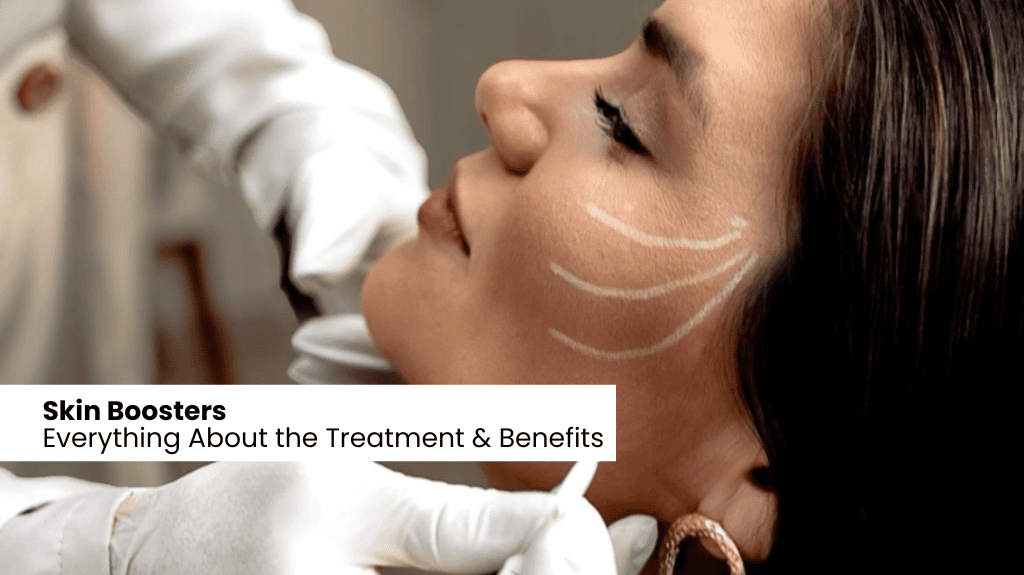
Skin boosters are injectable treatments formulated with hyaluronic acid, a substance naturally found in the body that helps retain moisture. Instead of changing your facial features, the treatment delivers hydration beneath the skin’s surface, improving skin quality from within.

The result is smoother, healthier-looking skin with improved elasticity and a natural glow.

Skin boosters treatment is commonly performed on the face, neck, hands, and décolletage, making it a versatile option for people looking to refresh tired or dehydrated skin.

How Do Skin Boosters Work?

Many people wonder, how do skin boosters work?

The treatment involves placing small amounts of hyaluronic acid into the skin using fine injections. Once injected, the hyaluronic acid attracts and retains water, providing deep hydration while stimulating collagen production over time.

Unlike dermal fillers that restore lost volume, skin boosters improve the skin itself by enhancing:

  • Hydration
  • Skin texture
  • Elasticity
  • Smoothness
  • Overall skin quality

The gradual improvement creates healthy, radiant skin that looks refreshed rather than altered.

Benefits of Skin Boosters

One of the reasons skin boosters treatment has become increasingly popular is the wide range of improvements it offers.

Some of the key benefits of skin boosters include:

Deep Skin Hydration

The treatment replenishes moisture beneath the skin, making it feel softer and more supple.

Naturally Glowing Skin

One of the biggest reasons patients choose skin boosters for glowing skin is their ability to restore radiance without changing facial features.

Improved Skin Texture

Fine lines caused by dehydration become less noticeable while the skin appears smoother and healthier.

Better Skin Elasticity

As collagen production improves, the skin feels firmer and more resilient.

Long-Lasting Skin Health

Unlike surface-level skincare products, skin boosters work beneath the skin, delivering hydration that lasts for several months.

What to Expect During Skin Boosters Treatment

A typical skin boosters treatment begins with a detailed skin assessment to understand your concerns and treatment goals.

The procedure usually takes around 30 to 45 minutes.

During treatment:

  • The skin is cleansed thoroughly.
  • A topical numbing cream may be applied.
  • Small amounts of hyaluronic acid are injected into targeted areas.
  • Patients can usually return to their routine shortly after treatment.

Some mild redness, swelling, or tiny injection marks may occur but generally settle within a few days.

Are Skin Boosters Good for Glowing Skin?

Yes. Skin boosters for glowing skin are specifically designed to improve skin hydration from within, which directly enhances skin radiance.

Because healthy, hydrated skin reflects light more evenly, patients often notice:

  • Brighter complexion
  • Softer skin
  • Improved smoothness
  • Reduced dullness
  • A naturally healthy glow

Rather than creating dramatic changes, skin boosters enhance your skin’s overall quality, helping you achieve fresh, luminous skin that still looks like you.

Why Choose Yavana for Skin Boosters?

At Yavana Skin and Hair Clinic, every skin boosters treatment begins with a personalised consultation and detailed skin analysis. Our experienced team creates customised treatment plans based on your skin type, concerns, and aesthetic goals.

Using advanced techniques and high-quality products, we focus on delivering safe treatments and natural-looking results that enhance your skin’s health and radiance over time.

Conclusion

Skin boosters offer an effective way to improve hydration, skin texture, and overall skin quality without changing your natural appearance. Whether you’re looking for preventive skincare or a solution for dull, dehydrated skin, skin boosters treatment provides long-lasting hydration and visible radiance.

If you’re considering skin boosters in Mumbai or exploring skin boosters for glowing skin, consult the experts at Yavana Skin and Hair Clinic. Our personalised approach focuses on improving skin hydration, texture, and long-term skin health while delivering naturally radiant results.

Frequently Asked Questions

1. How do skin boosters work?

Skin boosters work by delivering hyaluronic acid into the skin, where it attracts moisture and stimulates collagen production. This improves hydration, elasticity, and overall skin quality over time.

2. What are the benefits of skin boosters?

The main benefits of skin boosters include deep hydration, smoother skin texture, improved elasticity, reduced fine lines caused by dehydration, and a naturally radiant complexion.

3. Are skin boosters good for glowing skin?

Yes. Skin boosters for glowing skin improve hydration beneath the skin's surface, helping restore a brighter, healthier-looking complexion with long-lasting radiance.

4. How long do the results of skin boosters last?

Results from skin boosters treatment typically last between 6 and 9 months, depending on the product used, your skin condition, and lifestyle. Your doctor may recommend maintenance sessions for optimal results.

5. Is skin boosters treatment suitable for all skin types?

Yes, skin boosters treatment is generally suitable for most skin types. At Yavana Skin and Hair Clinic in Mumbai, skin boosters treatment is customised to deeply hydrate the skin, improve texture, and restore a healthy, radiant glow.

Biostimulators in Skincare: Benefits, Treatments & Complete Guide

Ageing is a natural process, but modern aesthetic treatments are shifting the focus from simply correcting visible signs of ageing to improving skin health from within. Biostimulators in skincare are at the forefront of this approach. Unlike treatments that provide instant volume, biostimulators work by stimulating your body’s natural collagen and elastin production, resulting in firmer, healthier, and more youthful-looking skin over time.

If you’ve questions regarding what are biostimulators, how they work, and whether a biostimulator treatment is right for you, here’s everything you need to know.

What Are Biostimulators in Skincare?

Biostimulators in skincare are injectable treatments designed to stimulate the body’s natural production of collagen and, in some cases, elastin. Instead of simply filling wrinkles or adding volume, they encourage the skin to repair and regenerate itself, leading to gradual and natural-looking rejuvenation.

As we age, collagen production slows down, causing the skin to lose firmness, elasticity, and volume. This is where biostimulators in skincare play an important role by rebuilding the skin’s structural support from within.

When understanding what are biostimulators, it’s also important to distinguish them from topical skincare products. While creams and serums work on the skin’s surface, injectable biostimulators target the deeper layers of the skin to stimulate long-term collagen production.

How Does a Biostimulator Treatment Work?

A biostimulator treatment works by triggering a natural healing response within the skin. Tiny biocompatible particles are injected into targeted areas, where they encourage fibroblasts, the cells responsible for collagen production, to create new collagen fibres over the following weeks and months.

This process, known as neocollagenesis, gradually restores skin structure, firmness, and elasticity.

Unlike dermal fillers that deliver immediate results, a biostimulator treatment improves the skin progressively. Most patients begin noticing visible improvements within a few weeks, with optimal results developing over the next few months as collagen production increases naturally.

The gradual improvement is one of the reasons biostimulators in skincare have become increasingly popular among patients seeking subtle and long-lasting rejuvenation. 

Types of Biostimulators in Skincare

Several types of injectable biostimulators are used in aesthetic medicine, each offering unique benefits depending on your skin concerns and treatment goals.

Poly-L-Lactic Acid (PLLA)

Commonly used for overall facial rejuvenation, PLLA stimulates collagen production while gradually restoring lost facial volume. It is often recommended for patients experiencing age-related volume loss.

Calcium Hydroxylapatite (CaHA)

CaHA provides both immediate structural support and long-term collagen stimulation. It is widely used to improve facial contours, tighten the skin, and soften deeper wrinkles.

Polynucleotides (PN) and Polycaprolactone (PCL)

These newer regenerative treatments focus on improving skin quality, cellular repair, hydration, and elasticity. They are increasingly being incorporated into personalised aesthetic treatment plans.

An experienced dermatologist will recommend the most suitable biostimulator treatment based on your skin condition, concerns, and desired outcome.

Benefits of Biostimulators

The growing popularity of biostimulators in skincare is largely due to their ability to deliver natural-looking and long-lasting improvements.

Natural-Looking Results

One of the biggest benefits of biostimulators is that they enhance your appearance gradually. Since the treatment stimulates your body’s own collagen production, the results look subtle and natural without creating an overfilled appearance.

Long-Lasting Rejuvenation

Unlike some aesthetic  treatments that require frequent maintenance, the benefits of biostimulators can last for up to two years or even longer, depending on the product used and individual factors.

Improved Skin Quality

In addition to restoring volume, benefits of biostimulators include smoother skin texture, improved elasticity, better hydration, and enhanced radiance.

Restores Structural Support

As collagen production increases, the skin regains strength and firmness from within. This helps reduce skin laxity and improves overall facial definition.

Who Is an Ideal Candidate for a Biostimulator Treatment?

A biostimulator treatment is suitable for individuals looking to improve skin quality, restore collagen, and address early to moderate signs of ageing without dramatically altering their appearance.

You may be a suitable candidate if you:

  • Notice reduced skin firmness or elasticity
  • Have mild to moderate facial volume loss
  • Want gradual, natural-looking results
  • Prefer long-term collagen stimulation over temporary correction
  • Are in good general health with realistic treatment expectations

A detailed consultation with a qualified dermatologist is essential to determine whether biostimulators in skincare are the right choice for your skin concerns. Looking for a personalised skin rejuvenation plan? 

What to Expect During and After a Biostimulator Treatment

Every biostimulator treatment begins with a thorough consultation, where your dermatologist evaluates your skin, discusses your concerns, and creates a customised treatment plan.

During the procedure:

  • The treatment area is cleansed.
  • A topical numbing cream may be applied for comfort.
  • The biostimulator is carefully injected into targeted areas.
  • The entire procedure usually takes around 30 to 60 minutes.

Following treatment, you may experience mild swelling, redness, tenderness, or bruising, which usually resolves within a few days.

Your dermatologist will also provide personalised aftercare instructions to support healing and optimise collagen production.

Since biostimulators in skincare work by stimulating natural collagen production, improvements continue to develop gradually over several months, delivering subtle and long-lasting results. 

Conclusion

As aesthetic medicine continues to evolve, biostimulators in skincare are redefining the way we approach anti-ageing and skin rejuvenation. Instead of simply treating visible signs of ageing, these advanced treatments encourage your skin to rebuild its own collagen, resulting in healthier, firmer, and naturally youthful-looking skin.

Whether you’re exploring what are biostimulators, learning about the benefits of biostimulators, or considering a biostimulator treatment, consulting an experienced aesthetic dermatologist is the best way to determine the right treatment for your unique skin needs.

Frequently Asked Questions

1. What are the benefits of biostimulators?

The primary benefits of biostimulators include natural collagen stimulation, improved skin firmness, enhanced elasticity, smoother texture, long-lasting rejuvenation, and gradual, natural-looking results.

2. How long do biostimulator treatment results last?

The results of a biostimulator treatment typically last between 18 months and 2 years, depending on the product used, the treatment area, and individual collagen production.

3. What is a biostimulator treatment?

A biostimulator treatment is an injectable aesthetic procedure that stimulates your body's natural collagen production to improve skin quality, firmness, elasticity, and facial structure over time.

4. What are biostimulators, and how are they different from fillers?

If you're wondering what are biostimulators, they are injectable treatments that encourage collagen production rather than simply adding volume. Unlike traditional fillers, they improve the skin gradually and focus on long-term regeneration.

5. Are biostimulators in skincare suitable for all skin types?

Biostimulators in skincare are suitable for many individuals experiencing early to moderate signs of ageing. However, a professional consultation is necessary to determine the most appropriate treatment based on your skin type, concerns, and medical history.

Hydra Medi Facial Benefits: Your Complete Guide to Glowing Skin

If you’re searching for an effective, non-invasive way to rejuvenate your skin, understanding hydra facial benefits can help you make the right choice. A Hydra Medi Facial (often referred to simply as HydraFacial) is more than a basic spa treatment. It’s a medical-grade facial therapy that combines deep cleansing, exfoliation, extraction, and hydration in a single session. This treatment is ideal for anyone who wants clearer, brighter, and more radiant skin with minimal downtime.

In this hydrafacial treatment guide, we’ll walk you through how the treatment works, why it’s becoming a favourite among dermatologists and beauty enthusiasts, and how it can fit into your skincare routine, especially if you’re preparing for important events or simply want long-lasting glow and healthier skin.

What Is a Hydra Medi Facial and How Does It Work?

A Hydra Medi Facial is designed to address multiple skin concerns in one session using technology-driven steps rather than manual techniques. By combining cleansing, exfoliation, extraction, and hydration, it improves overall skin health while remaining gentle and non-invasive.

Unlike traditional facials that focus on surface-level cleansing, this facial uses a specialised device that gently vacuums away dead cells and impurities while simultaneously delivering hydration and active ingredients deep into the skin.

The treatment typically follows a set sequence:

  • Deep Cleansing removes surface dirt and oil.
  • Exfoliation sweeps away dull, dead cells.
  • Extraction unclogs pores painlessly.
  • Hydration & Serum Infusion delivers antioxidants, peptides, and hyaluronic acid.

This combination not only clears impurities but also leaves the skin intensely hydrated and glowing without downtime. Because of this, Hydra Medi Facials are often chosen by people who need immediate results before weddings, parties, photoshoots, or other special occasions.

Hydra Facial Benefits You Should Know

Unlike conventional facials that offer only temporary softness, hydra facial benefits focus on improving skin function, hydration, and clarity. Each step works together to enhance both immediate appearance and long-term skin health.

Many people mistake facials for luxury pampering, but hydra facial benefits for skin extend far beyond a temporary glow. This treatment is designed to improve skin health at multiple levels.

1. Instantly Brighter, More Radiant Skin

One of the most visible hydra facial benefits is immediate luminosity. Exfoliation combined with hydrating serums helps the skin appear smoother, brighter, and more even-toned immediately after treatment.

2. Deep Pore Cleansing Without Irritation

Unlike manual extraction or harsh chemical peels, a Hydra Medi Facial uses gentle vacuum technology to clear clogged pores with minimal irritation, making it suitable even for sensitive skin.

3. Improved Texture and Tone

Regular sessions help refine rough texture and improve overall skin tone. Over time, superficial blemishes, uneven pigmentation, dullness, and minor acne marks become less noticeable.

4. Enhanced Hydration

The infusion step delivers moisture-binding ingredients such as hyaluronic acid directly into the skin, improving elasticity, hydration, and resilience.

5. Suitable for Most Skin Types

Whether your skin is dry, oily, acne-prone, combination, or sensitive, the treatment can be customised to your needs without harsh side effects. Dermatologists often recommend it as a gentle yet highly effective solution.

6. No Downtime

One of the biggest hydra facial benefits is that you can return to work or social activities immediately after treatment, making it perfect for busy schedules.

When to Choose a Hydra Medi Facial

Choosing the right treatment depends on your skin’s condition, lifestyle, and timeline. A Hydra Medi Facial is ideal when your skin needs quick revitalisation without the downtime associated with aggressive procedures.

A Hydra Medi Facial is particularly suitable if you’re:

  • Dealing with dull or tired-looking skin
  • Preparing for a wedding or special occasion
  • Experiencing clogged pores or blackheads
  • Struggling with uneven skin tone or texture
  • Looking for monthly skin maintenance
  • Interested in hydrafacial for glowing skin

When incorporated into a personalised skincare plan, regular treatments help maintain healthy, radiant skin throughout the year.

Comparing Hydra Medi Facial to Other Facials

Understanding how a Hydra Medi Facial differs from traditional facials helps set realistic expectations.

Traditional facials typically involve cleansing, steaming, and manual exfoliation. While relaxing, they don’t always produce measurable long-term improvements.

In contrast, Hydra Medi Facials combine advanced technology with active ingredients that penetrate deeper into the skin while cleansing, extracting impurities, and delivering intense hydration.

Traditional Facial

  • Surface-level cleansing
  • Temporary glow
  • Manual extraction

Hydra Medi Facial

  • Multi-step cleansing
  • Vacuum-assisted extraction
  • Deep hydration
  • Longer-lasting skin health improvements

This makes it an excellent option for anyone looking for visible skin improvement after just one session.

How Often Should You Get a Hydra Medi Facial?

Frequency plays an important role in maintaining your results.

While one treatment offers immediate improvement, dermatologists generally recommend a Hydra Medi Facial once every four weeks for ongoing maintenance.

If you’re addressing acne, pigmentation, or uneven texture, your dermatologist may suggest a customised treatment schedule initially before transitioning to monthly sessions.

Pre- and Post-Treatment Tips

Proper preparation and aftercare help maximise hydra facial benefits for skin while protecting your skin barrier.

Before Treatment

  • Avoid retinoids and harsh exfoliants for several days.
  • Avoid heavy makeup on the day of your appointment.
  • Inform your dermatologist about any allergies or skin sensitivities.

After Treatment

  • Use gentle skincare products for 24 to 48 hours.
  • Apply broad-spectrum sunscreen every day.
  • Avoid strenuous workouts and excessive heat immediately after treatment.

Hydrafacial Treatment Guide: What to Expect

Knowing what happens during your appointment helps you feel comfortable and confident.

This hydrafacial treatment guide outlines each stage of the treatment.

Consultation & Skin Assessment

Your dermatologist evaluates your skin concerns and treatment goals.

Cleansing & Exfoliation

Dead skin cells, oil, and impurities are gently removed.

Extraction

Vacuum technology clears congestion and blackheads comfortably.

Serum Infusion

Customised antioxidants, peptides, and hyaluronic acid are infused into the skin.

Final Nourishment

Additional boosters may be applied depending on your skin concerns.

The entire procedure usually takes 30 to 60 minutes and requires no downtime.

Hydra Medi Facial at Yavana Skin & Hair Clinic

At Yavana Skin & Hair Clinic, every Hydra Medi Facial is customised using a dermatologist-led approach rather than a one-size-fits-all protocol.

Each treatment is tailored to your skin type, concerns, and goals. Whether you’re looking for hydrafacial for glowing skin, hydration, acne management, or improved texture, our specialists personalise every session for optimal results.

With clinics in Mulund and Bandra, Yavana combines advanced technology with dermatological expertise to deliver safe, effective, and long-lasting skin rejuvenation.

Ready for radiant, healthy skin? Book your Hydra Medi Facial consultation at Yavana Skin & Hair Clinic today.

Why Hydra Medi Facial Is Worth It

Choosing the right facial means balancing effectiveness, safety, and long-term results.

The many hydra facial benefits make this treatment much more than a routine facial. It cleanses, exfoliates, extracts impurities, and deeply hydrates the skin in a single session. With personalised guidance from the experts at Yavana Skin & Hair Clinic, regular Hydra Medi Facials can help maintain healthier, brighter, and visibly refreshed skin all year round.

Frequently Asked Questions

Q: How often should I get a hydra medi facial?

For maintenance, dermatologists usually recommend a hydra medi facial once every four weeks. For corrective concerns such as acne, congestion or uneven texture, a personalised treatment plan may include more frequent sessions initially.

Q: How long do hydra medi facial benefits last?

Hydra medi facial benefits can last several days, depending on skin type and lifestyle factors. Regular sessions help maintain hydration, clarity, and smooth texture over time.

Q: What happens during a hydrafacial treatment guide session?

According to a standard hydrafacial treatment guide, the procedure includes cleansing, exfoliation, vacuum-based extraction, and serum infusion. The entire session typically takes 30–60 minutes and requires no recovery time, allowing patients to resume daily activities immediately.

Q: Is the hydra medi facial at Yavana suitable for sensitive skin?

Yes, the hydra medi facial at Yavana is customised based on your skin type and sensitivity levels. Following a dermatologist-led hydrafacial treatment guide, the clinic adjusts serum selection and intensity to ensure maximum hydra medi facial benefits without causing irritation or downtime.

Q: How does Yavana customise a hydra medi facial for different skin concerns?

At Yavana Skin & Hair Clinic, every hydra medi facial begins with a detailed skin assessment to understand concerns like dehydration, acne, pigmentation, or uneven texture. Based on this evaluation, specialists personalise the treatment to maximise hydra medi facial benefits while ensuring safety, comfort, and long-term skin health.

Q: What are the benefits of Hydra Facial?

The key hydra facial benefits include deep cleansing, painless extraction, intense hydration, improved skin texture, brighter complexion, refined pores, and minimal downtime. Regular treatments also support long-term skin health and hydration.

Q: What is Hydra Glow Facial?

If you're wondering what is hydra glow facial, it's a skin-rejuvenating facial treatment that combines cleansing, exfoliation, extraction, and serum infusion to deeply hydrate the skin and restore a healthy glow. It's often chosen before important events because it delivers immediate radiance without downtime.

Hyperpigmentation on Neck: Causes, Treatments & Prevention

Most of us spend a surprising amount of time looking after our face. We invest in serums, sunscreens, and facials. But the neck often gets ignored until one day, while getting ready or catching a glimpse in the mirror, we notice that it looks noticeably darker than the surrounding skin. If you’ve been dealing with Hyperpigmentation On Neck, you’re not alone. 

It is one of the most common concerns dermatologists encounter, and contrary to popular belief, it has very little to do with cleanliness. The internet often reduces a dark neck to dirt, dead skin, or something that can be fixed with lemon and vigorous scrubbing. Skin, unfortunately, is rarely that simple.

The good news is that a dark neck is not something you simply have to live with.

Ahead, we’ll unpack the common causes behind Hyperpigmentation On Neck, the mistakes that often make it worse, and how dermatologists approach treatment.

Your Neck Isn’t Dirty. So Why Is It Getting Darker?

The neck goes through more than we realise. It bends, stretches, rubs against collars and chains, and remains exposed to sunlight every day. Over time, these factors can influence how pigment behaves. In many cases, Hyperpigmentation On Neck develops because of repeated friction, sun exposure, hormonal changes, inflammation, or even underlying medical conditions. 

According to the American Academy of Dermatology, changes in pigmentation occur when melanocytes, the cells responsible for producing melanin, become overactive. The result is uneven darkening that can undermine confidence and is often stubborn to treat without understanding the cause.

Some common causes include:

  • Excess sun exposure
  • Friction from clothing or jewellery
  • Hormonal changes
  • Post-inflammatory pigmentation
  • Obesity and insulin resistance
  • Acanthosis nigricans
  • Certain medications
  • Ageing and environmental damage

Interestingly, a dark neck is not always a cosmetic issue. Sometimes, it can be linked to underlying health conditions.

The Medical Conditions Behind Neck Pigmentation

A sudden darkening around the neck deserves attention. Conditions like insulin resistance, diabetes, thyroid disorders and polycystic ovarian syndrome can sometimes manifest as pigmentation around the neck. Acanthosis nigricans, for instance, causes velvety, dark patches and is frequently associated with elevated insulin levels.

Your skin often reflects changes happening beneath the surface. It notices internal changes before the rest of the body does. Ignoring those signs and focusing only on home remedies may delay proper diagnosis.

Dark Neck Treatment: Can Scrubbing Fix it?

One of the biggest misconceptions surrounding pigmentation is that it represents dirt. It doesn’t. Pigmentation is produced beneath the skin. From rubbing lemon juice and baking soda to making coffee scrubs and gram flour packs seen on reels and YouTube videos, Indians have never been short on home remedies. Some of which can be totally clinically wrong

Unfortunately, what feels like “natural skincare” can often irritate the skin, trigger inflammation and make pigmentation even more stubborn. That is why many people feel frustrated. They try everything, yet the darkness persists. The problem isn’t effort.

The problem is treating the wrong cause.

What Does a Dark Neck Treatment Dermatologist Actually Do?

Treating pigmentation is a bit like solving a puzzle. The dark patch you see on the surface is only one piece of the picture. Two people may have similar-looking neck pigmentation and still require entirely different treatments. The goal is to identify the cause of the pigmentation and address it thoughtfully.

Here are some treatment options that dermatologists may recommend.

Chemical Peels

Chemical peels help exfoliate damaged skin layers and stimulate fresh cell turnover. They are especially useful for mild to moderate pigmentation and uneven skin tone. With repeated sessions, many patients notice smoother and brighter skin.

Prescription Creams

Ingredients like hydroquinone, azelaic acid, retinoids and kojic acid can help reduce excess melanin production. However, these ingredients should always be used under professional supervision. Incorrect use can lead to irritation and rebound pigmentation.

Laser Treatments

Laser technology targets excess pigment with precision. It is often recommended for stubborn pigmentation that does not respond well to topical products. Treatment sessions vary depending on the severity and underlying cause.

Treating Internal Factors

Sometimes, pigmentation improves only when the root cause is addressed. Weight management, hormonal balance and metabolic health can all influence skin appearance. In such situations, treatment goes beyond the skin itself.


The Right Dark Neck Treatment Needs Right Diagnosis

There is a reason why dark neck treatment dermatologists ask so many questions. Pigmentation isn’t only what is visible on the surface. Age, hormones, lifestyle, medications and even medical history can influence how your skin behaves. Which means the best treatment is the one that makes sense for your skin.

A dermatologist evaluates:

  • Skin type
  • Pigmentation depth
  • Lifestyle factors
  • Medical history
  • Existing conditions
  • Previous treatments

The goal is not simply to lighten the skin. The goal is to restore healthy and even pigmentation safely.

Social media often promotes miracle creams and overnight fixes. Dermatology does not work that way. Pigmentation develops gradually. So, obviously improvement also takes time. A dark neck treatment dermatologist recommends after examination may involve combinations of peels, prescription products and maintenance routines. 

A successful treatment is doing what your skin actually needs, and allowing it enough time to respond.

Can Hyperpigmentation on Neck Be Prevented?

More often than not, pigmentation develops over months or even years. This is why prevention is all about paying attention to the little things your skin experiences every day. A few simple habits can help protect your neck and support a more even skin tone in the long run.

  • Apply sunscreen to your neck daily
  • Avoid harsh scrubs
  • Minimise friction from chains and tight collars
  • Maintain a healthy weight
  • Address hormonal issues early
  • Keep the skin moisturised

Most importantly, don’t ignore early changes.

Catching Hyperpigmentation On Neck in its initial stages often leads to better outcomes.

When Should You Stop Guessing and See a Dermatologist?

People often spend months experimenting with products before visiting a dermatologist. By then, pigmentation may have become deeper and more difficult to manage. At Yavana Skin and Hair Clinic, every treatment plan begins with understanding the reason behind the pigmentation. 

Dr. Madhuri Agarwal and her team focus on treatment-led solutions. US FDA-approved technologies, personalised care and a scientific approach help ensure that treatments are designed around your skin.

The earlier the cause is identified, the easier it becomes to treat the pigmentation before it settles deeper into the skin.

Conclusion

Hyperpigmentation on neck sits at the intersection of dermatology, lifestyle and, at times, overall health. Which means managing it successfully requires products, patience as well as context.

Pigment-producing cells do not become overactive without a trigger. Whether that trigger is repeated friction, chronic inflammation, ultraviolet exposure or an underlying metabolic imbalance, identifying it changes the way treatment is approached.

This is why modern dermatology has moved away from one-size-fits-all solutions. At Yavana Skin and Hair Clinic, treatment plans are designed around the biology of the individual rather than the appearance of the pigmentation alone. Under the guidance of Dr. Madhuri Agarwal, the goal is to address the factors contributing to the concern and support healthier skin over the long term.

Frequently Asked Questions

1. What causes hyperpigmentation on neck?

Hyperpigmentation on Neck can occur due to several factors, including sun exposure, friction, hormonal changes, obesity and insulin resistance. Certain medical conditions, such as acanthosis nigricans, may also contribute to darkening.

2. Can neck pigmentation be treated permanently?

Many cases of neck pigmentation respond well to treatment, especially when the root cause is addressed. Chemical peels, prescription creams and laser treatments can significantly improve the appearance of the skin.

3. Which dark neck treatment dermatologist usually recommends?

There is no single treatment that works for everyone. Depending on the cause and severity, a dermatologist may recommend prescription medications, chemical peels, laser treatments or a combination approach. A personalised treatment plan usually delivers the best results.

4. Are home remedies effective for dark neck treatment?

Home remedies may not always address the reason behind the pigmentation. In some cases, ingredients like lemon or baking soda can irritate the skin and worsen discoloration. It is always advisable to seek professional guidance before trying DIY solutions.

5. How long does dark neck treatment take to show results?

Results depend on the cause, the depth of pigmentation and the treatment being used. Some people notice improvements within a few weeks, while others may require multiple sessions over several months. Consistency and proper aftercare play a major role in achieving long-term results.

Botox Before and After: The Questions You Are Actually Googling, Answered

If you have been staring at Botox before and after photos for weeks, something specific is holding you back. It is rarely the cost. More often, it is the uncertainty: will it look like me, or will it look like something was done? That question deserves a straight answer, not a sales pitch.

At Yavana Skin and Hair Clinic, the conversation around Botox starts with what your face actually needs, not with what the treatment can theoretically do. Dr Madhuri Agarwal has spent 20 years watching patients walk in hesitant and leave wondering why they waited so long. That experience shapes how every consultation here is run.

Here is exactly what the Botox before and after journey looks like, from the first appointment to the two-week mark.

Before the Needle: What the Consultation Actually Involves

The before half of any Botox before and after result is built entirely in the consultation room. This is where the outcome is either set up correctly or quietly compromised.

Dr Madhuri begins by mapping your facial movements. She watches how you raise your brows, squint, and frown, not to judge, but to understand the specific muscles driving the lines you want addressed. Botox works by temporarily relaxing targeted muscles, so the placement has to follow your anatomy rather than a generalised diagram.

She will ask what you want from the treatment. Patients come in with very different goals. Some want lines visibly softened. Others want no one at all to know they had anything done. Some are in their late twenties and thinking preventively. Others are in their forties, addressing lines that have settled over the years. Each of these requires a different dosage, a different placement strategy, and a different conversation.

Before your appointment, avoid aspirin, ibuprofen, vitamin E and alcohol for at least 24 hours. These thin the blood and increase the likelihood of bruising at injection sites. Staying well hydrated in the days prior also helps the treatment settle more evenly. These are not warnings to pad a consent form; they genuinely affect the quality of your result.

The First Time Botox Experience: What Happens in the Chair

A first time Botox experience tends to be far less dramatic than people anticipate. The procedure itself runs between 15 and 30 minutes, depending on the areas being treated.

Dr Madhuri uses a very fine needle for each injection. The sensation is a brief, sharp pinch; most patients describe it as considerably less uncomfortable than they expected. No anaesthesia is needed, though a topical numbing cream is available at Yavana Skin and Hair Clinic for anyone who prefers it.

The most common treatment areas are the forehead, the glabellar lines sitting between the brows, and the crow’s feet fanning out from the outer corners of the eyes. Each site requires a specific injection depth and angle. When placed too incorrectly , the product disperses unevenly, and the result looks uneven. Placed too deep, it can affect muscles that were never the intended target.

This is where 20 years of clinical experience becomes directly visible in the outcome. Dr Madhuri is not estimating anatomy; she is working with a level of precision that comes from having done this thousands of times across genuinely different faces.

After the injections, you will notice small raised bumps at each site. They look like mild insect bites and resolve within glfew hours. You can leave the clinic immediately and return to most of your day without any visible evidence of treatment.

Botox for Beginners

What to Expect After Botox: The First Two Weeks, Day by Day

Knowing what to expect after Botox is what separates a calm recovery from an anxious one. The most common mistake first-timers make is expecting immediate results and assuming something went wrong when they do not appear.

Botox does not work on contact. The neurotoxin gradually binds to nerve endings, progressively reducing the muscle contractions and relaxing them that cause lines to form. The process takes time, and that timeline is worth knowing in advance.

Days 1 to 3

Mild redness, slight swelling, and tenderness at the injection sites are normal at this stage. Avoid rubbing or pressing on the treated areas; physical pressure can cause the product to shift away from the intended site. Avoid lying flat for the first four hours post-procedure for the same reason.

Days 3 to 5

Subtle changes begin. Certain expressions may feel slightly different, a little softer, a little less effortful. This treatment is beginning to take hold. The change at this point is quiet, not dramatic, and that is exactly as it should be.

Days 7 to 10

The result becomes more visible. Lines that previously appeared with expression look noticeably softer. At rest, the skin over those muscles looks smoother and more even.

Day 14

Full results are visible by this point. At Yavana, a two-week review is built into the treatment plan. If any area needs a minor touch-up, Dr Madhuri addresses it at this appointment. Assessing the outcome before day 14 leads to unnecessary second-guessing; the treatment simply has not finished working yet.

During this two-week window, skip intense physical exercise for the first 24 hours. Avoid facial steam treatments, saunas, and direct heat for 48 hours. These increase circulation in a way that can interfere with the product’s settling.

How Long Does Botox Take to Work, And How Long Does It Last?

How long does Botox take to work depends on which part of the question you mean. The first signs of effect appear between days three and five. Full results settle by day 14. Evaluating the outcome before that point gives you an incomplete picture.

In terms of how long the results last, most patients at Yavana Skin and Hair Clinic see their Botox last for four  to six months. Individual variation plays a significant role here. Metabolism, the specific muscles treated, the dosage used, and how active those muscles are in daily expression all influence how quickly the body processes the neurotoxin. People who are particularly expressive tend to metabolise it slightly faster.

One pattern Dr Madhuri observes consistently: patients who maintain a regular Botox schedule over time often need progressively less product to achieve the same result. Muscles that are repeatedly relaxed gradually stay in position , which means the treatment becomes more efficient, and sometimes the interval between sessions extends naturally.

This is one reason starting earlier, before lines become deeply etched, tends to produce cleaner long-term results. Prevention requires less correction.

Choosing the Right Clinic for Botox in Mumbai

What separates a good botox before and after result from a poor one is rarely the product. The neurotoxin used across most reputable clinics is largely the same. What differs is the clinical thinking applied before the needle is ever picked up.

At Yavana, Botox is not a walk-in treatment with a fixed price and a standard injection map. Dr Madhuri Agarwal assesses each face individually, the muscle movement, the depth of lines, the patient’s goals, and builds the treatment plan from that assessment outward. For anyone navigating a first time botox experience, that difference becomes obvious the moment the consultation begins.

Patients are not moved through a session quickly. What to expect after botox at Yavana Skin and Hair Clinic is not just a list of aftercare instructions handed at the door; it is a two-week plan with a follow-up built in, because the outcome is tracked, not assumed. And for anyone still asking how long does botox take to work, the honest answer is 14 days, and Yavana makes sure you are supported through every one of them.

That clinical thinking is what makes the result look like you, only refreshed.

Frequently Asked Questions

Q1. What does a Botox before and after result look like at Yavana?

Results look like a rested, smoother version of your face. Dr Madhuri builds every plan around your facial anatomy. Natural, not done- that is the consistent standard at Yavana.

Q2. What is a first time Botox experience actually like?

Shorter and less uncomfortable than most people expect. The procedure takes 15 to 30 minutes. The sensation is a brief pinch. No recovery period follows; most patients return to their day immediately.

Q3. What should I expect after Botox in the first 72 hours?

Mild redness and slight swelling at injection sites resolve within the hour. Avoid rubbing treated areas, skip exercise for 24 hours, and stay away from heat and steam for 48 hours.

Q4. How long does Botox take to work and when should I expect to see results?

First signs appear between days three and five. Full results settle by day 14. Judging the outcome before that gives you an incomplete picture; the treatment simply has not finished working yet.

Q5. How long does Botox take to work in Mumbai climate?

Mumbai's humidity does not change the timeline. First effects appear between days three and five. Full results settle by day 14. Heat and sun exposure after treatment, however, can affect how long the results last. Yavana's aftercare guidance specifically accounts for this.

1 2 3 8